Drawing Excellence and Sequentially Progressive Modules
Freehand Cast Drawing
Sight-size is a powerful and precise method for training the eye, establishing proportion, and developing an objective approach to observation. However, students must also learn to draw effectively in situations where sight-size cannot be applied. The ability to work independently from the method is an essential part of becoming a versatile and confident draftsman.
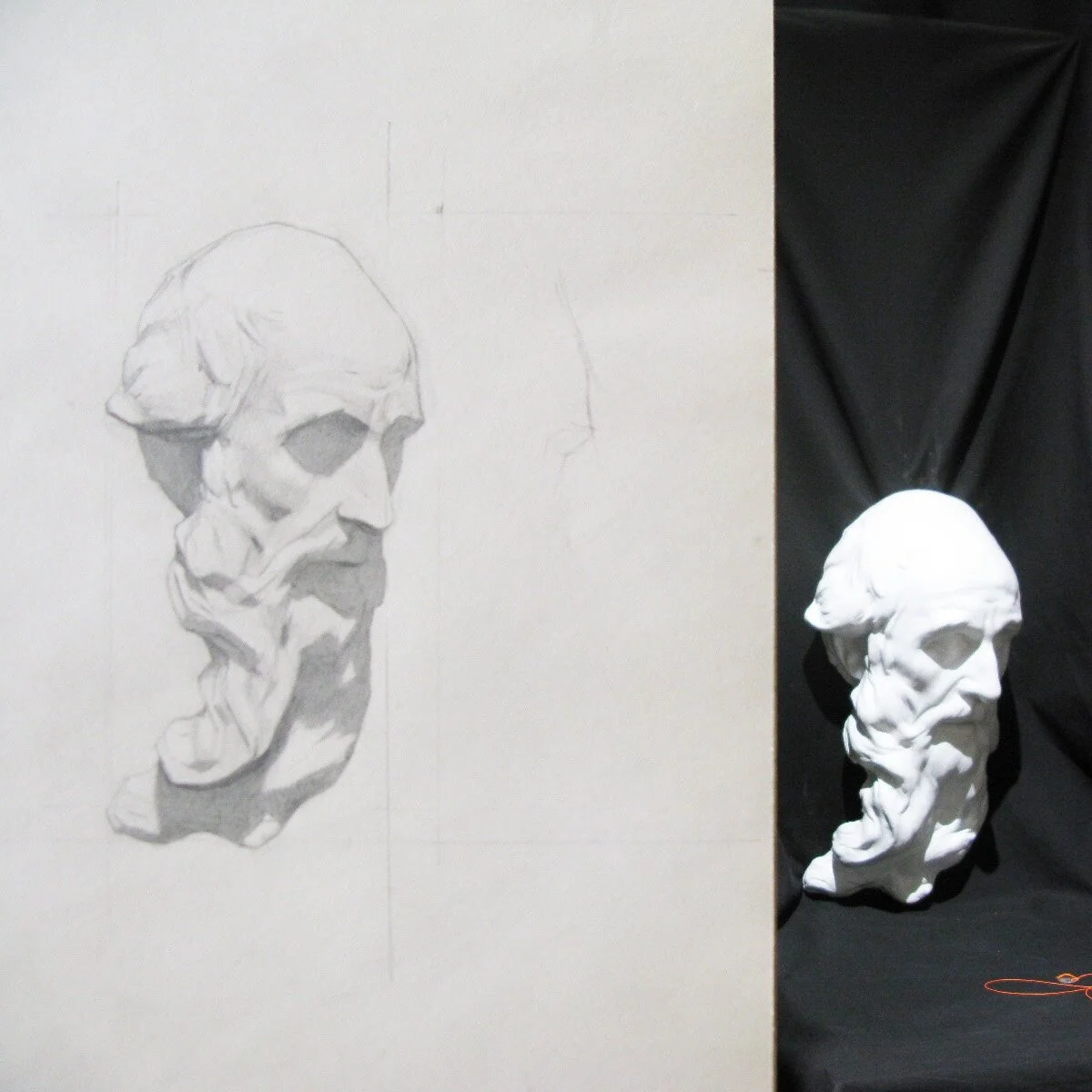
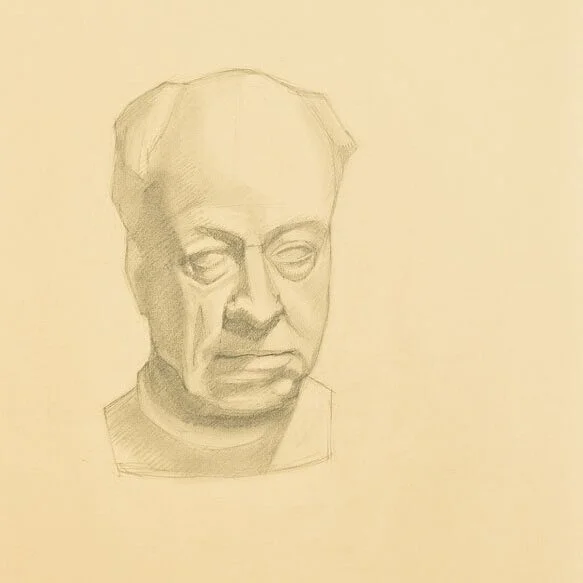
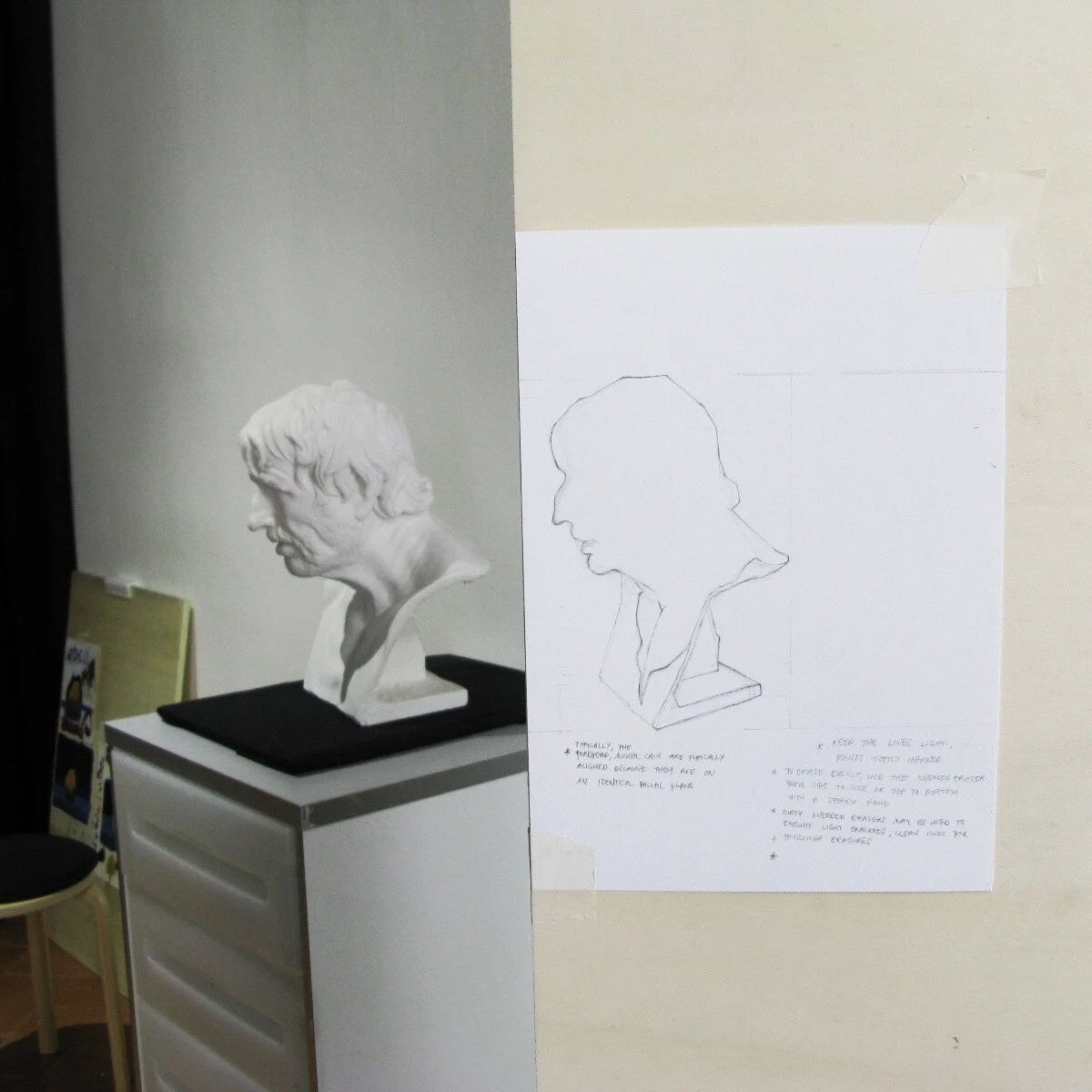
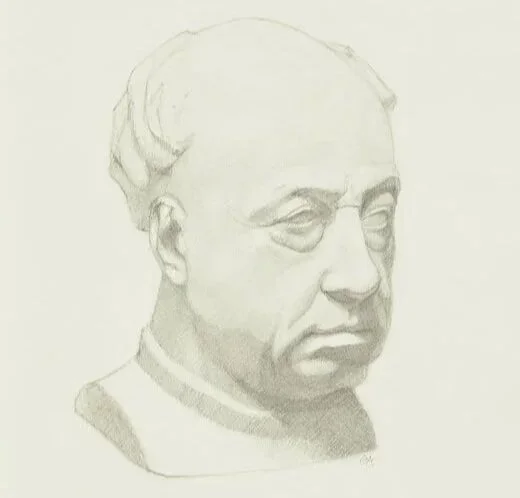
To complement the previous work in sight-size, students return to the study of casts using proportional relationships rather than direct size comparison. Working freehand in pencil or charcoal, they learn to establish the scale and proportions of the subject through careful visual comparison, measurement, and analysis. The focus shifts from reproducing the subject at a predetermined scale to understanding the relationships between its parts and constructing the drawing accordingly.
Students learn to identify and compare relative proportions, angles, alignments, intervals, and the relationships between major and minor forms. Rather than relying on the physical correspondence between the subject and the drawing, they develop the ability to determine these relationships directly through observation. This encourages a more flexible approach that can be applied to subjects of different sizes, at different distances, and in a variety of working environments.
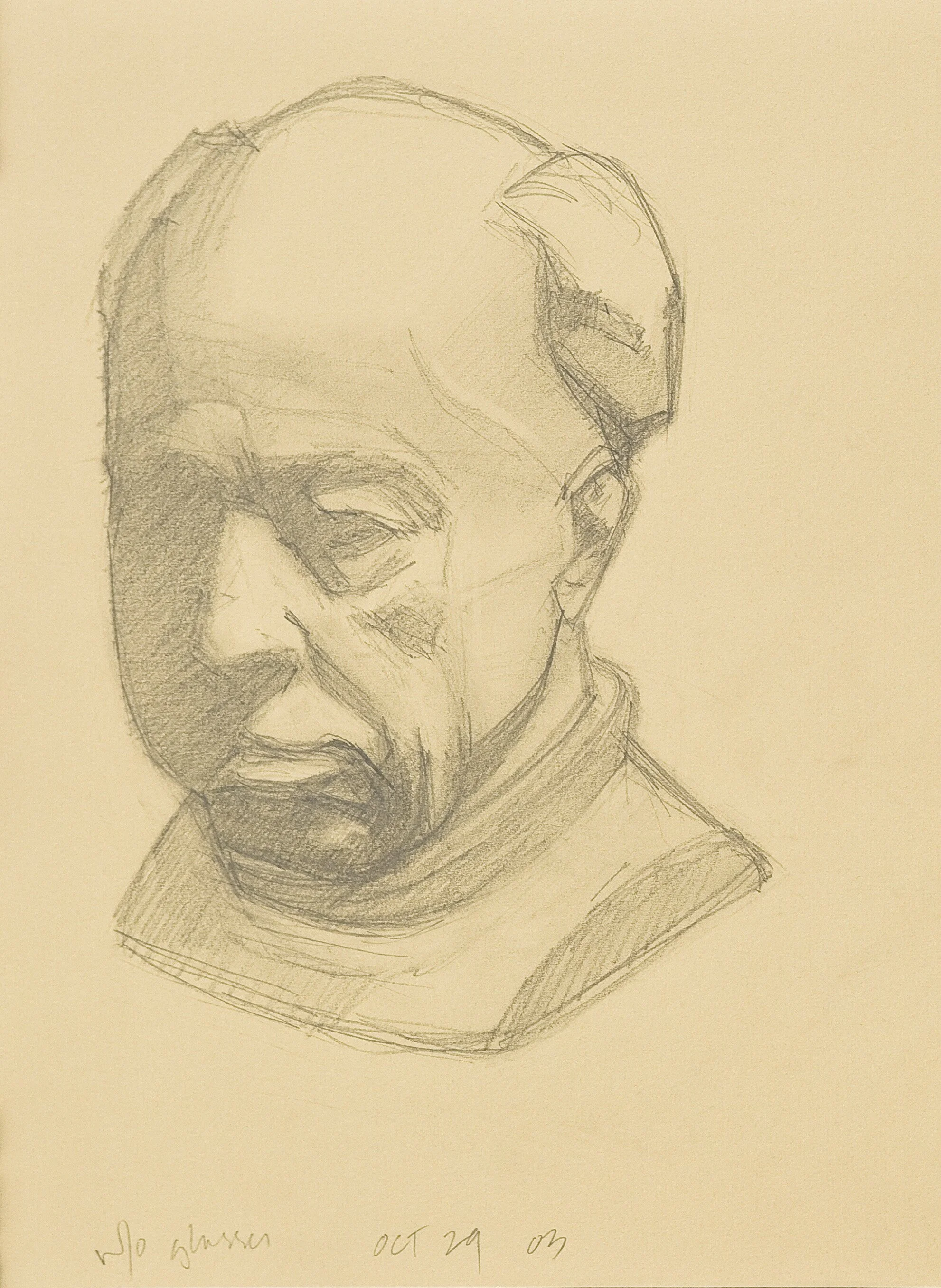
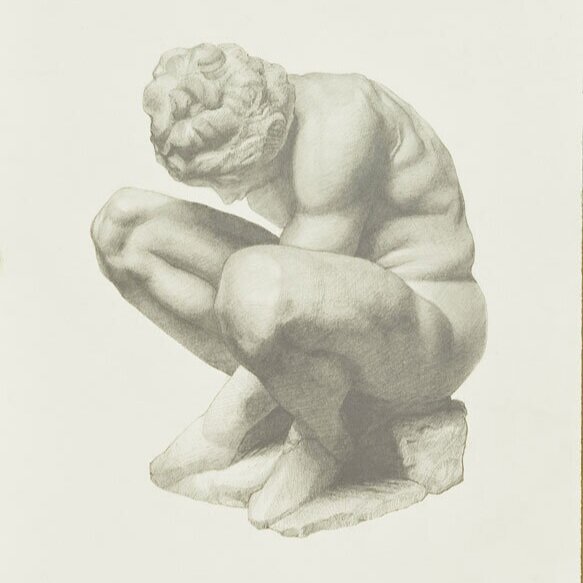
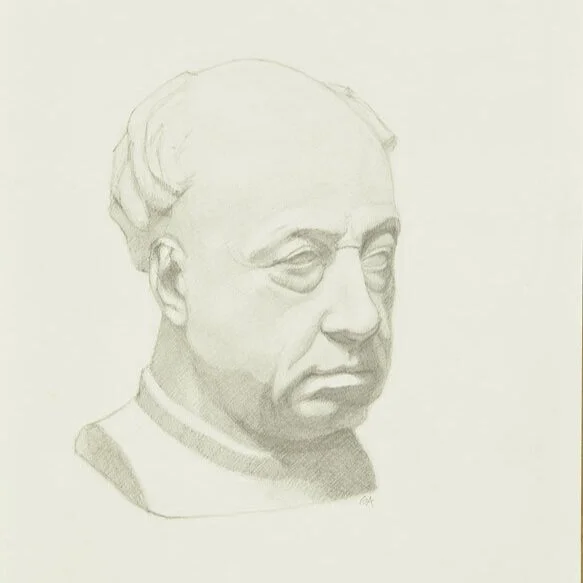
The tonal development of the drawing is adapted to the characteristics of the chosen medium. In pencil, students explore controlled gradations and subtle transitions of value; in charcoal, they work with a broader range of tones and more expressive possibilities in the handling of light and shadow. Modeling is used to describe the turning of form and establish a convincing sense of three-dimensional volume, while maintaining the structural clarity established during the earlier stages of the program.
These exercises reinforce the principles learned through sight-size while requiring a greater degree of independence from the student. The objective is not to replace sight-size, but to complement it with a method of drawing based on proportional reasoning and direct observation. By practicing both approaches, students develop a broader set of tools and become increasingly capable of adapting their drawing process to different subjects, environments, and working conditions.