Drawing Excellence and Sequentially Progressive Modules
Figure Painting
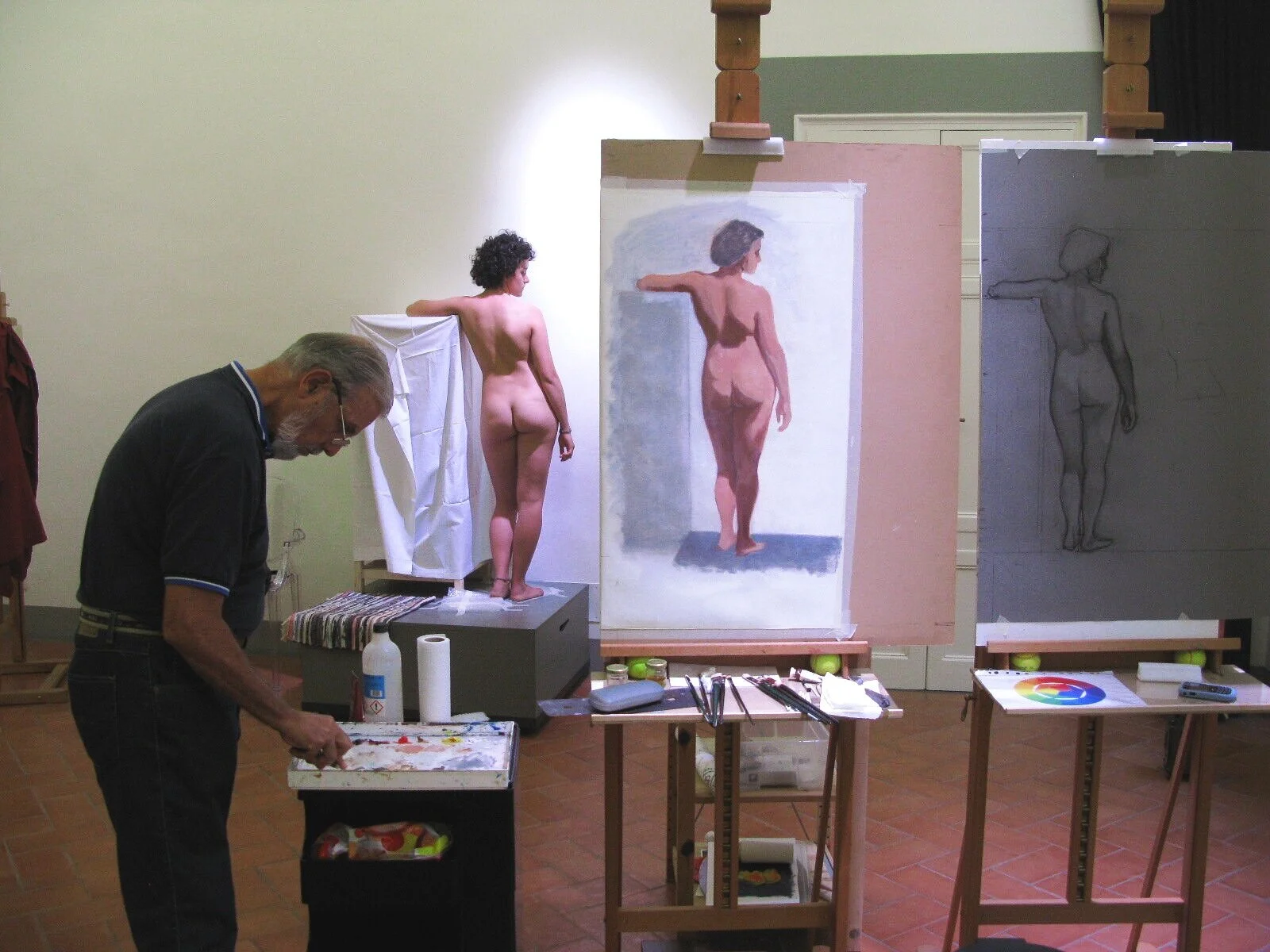
Figure painting represents one of the central and most demanding goals of academic training: the study and painting of the human form from life. Building upon the skills developed through the preceding stages of the program, students bring together their understanding of drawing, proportion, structure, gesture, chiaroscuro, color, and observation in a sustained study of the live model.
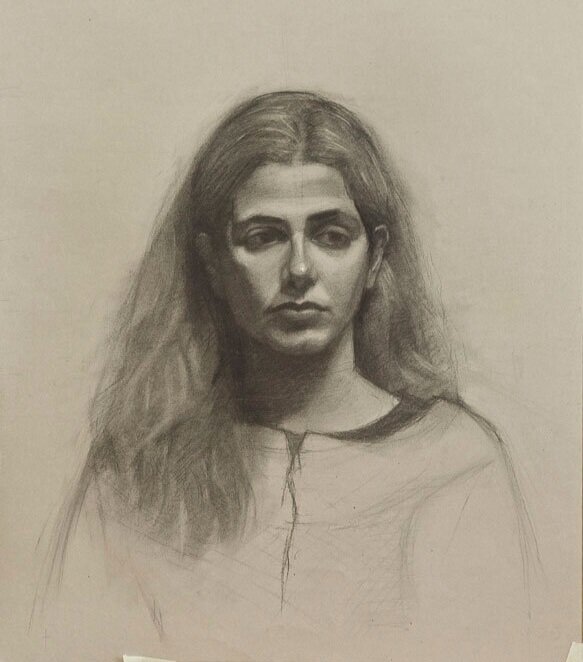
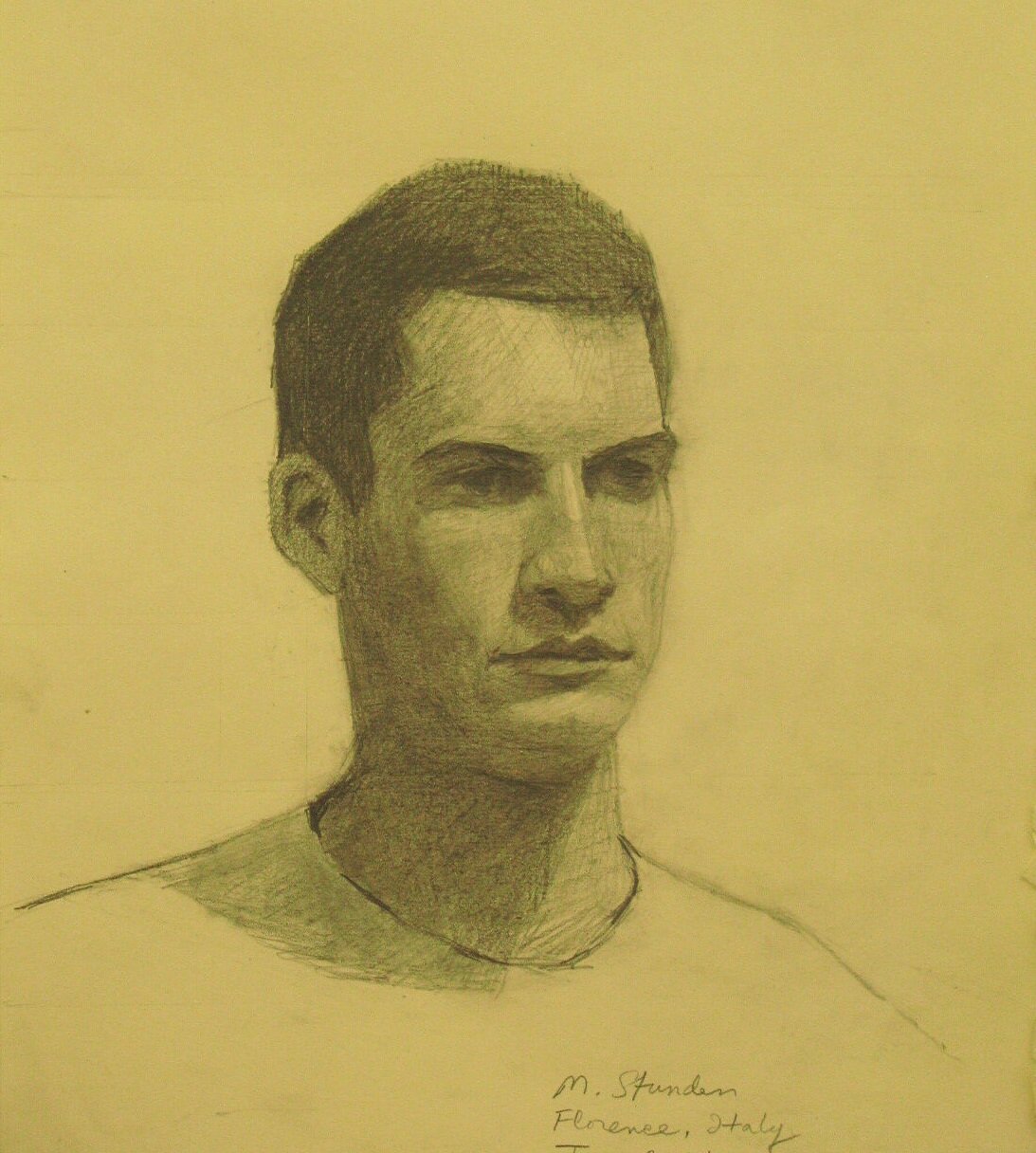
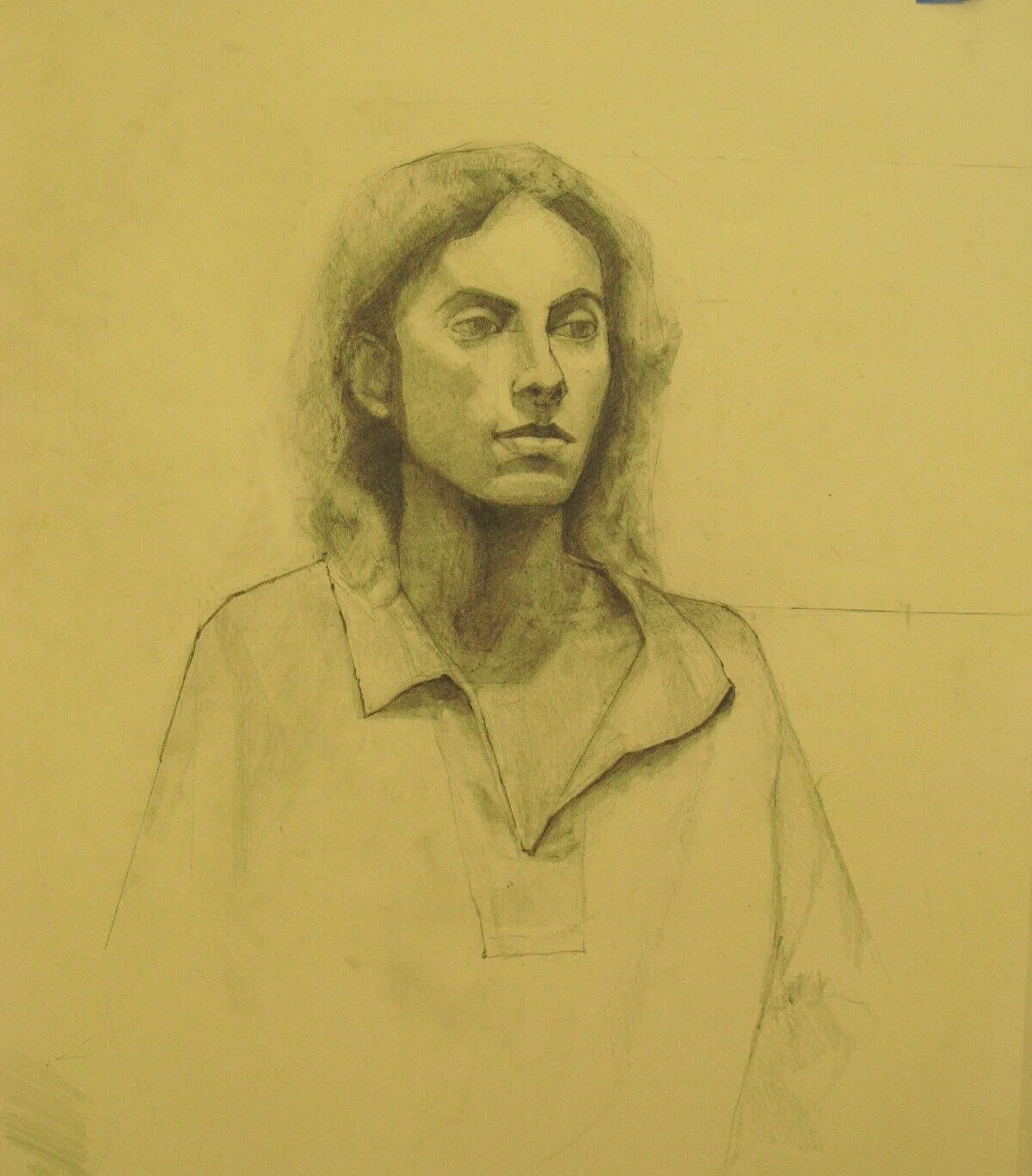
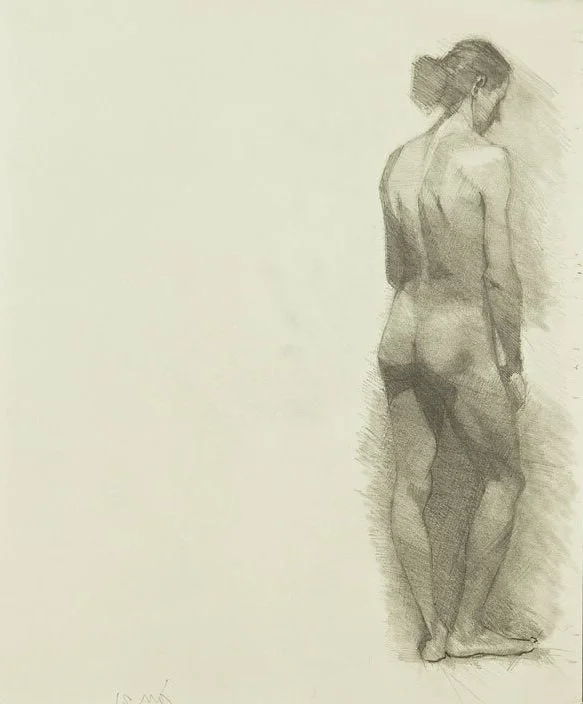
Working under the guidance of an experienced instructor, students follow a structured process that begins with the careful observation and construction of the figure. The initial block-in drawing establishes the overall placement, proportion, gesture, and structural relationships of the pose. Particular attention is given to maintaining the accuracy and clarity developed through the earlier drawing studies, ensuring that the painting is founded upon a strong understanding of the underlying form.
Once the drawing has been sufficiently developed, it is transferred to a prepared panel or canvas. This allows the student to preserve the careful structural work of the initial drawing while beginning the process of translating it into paint. Before undertaking the final painting, students may prepare one or more bozzetti or color studies. These small studies provide an opportunity to investigate the composition, organization of values, color relationships, and overall visual effect of the painting before committing to the larger work.
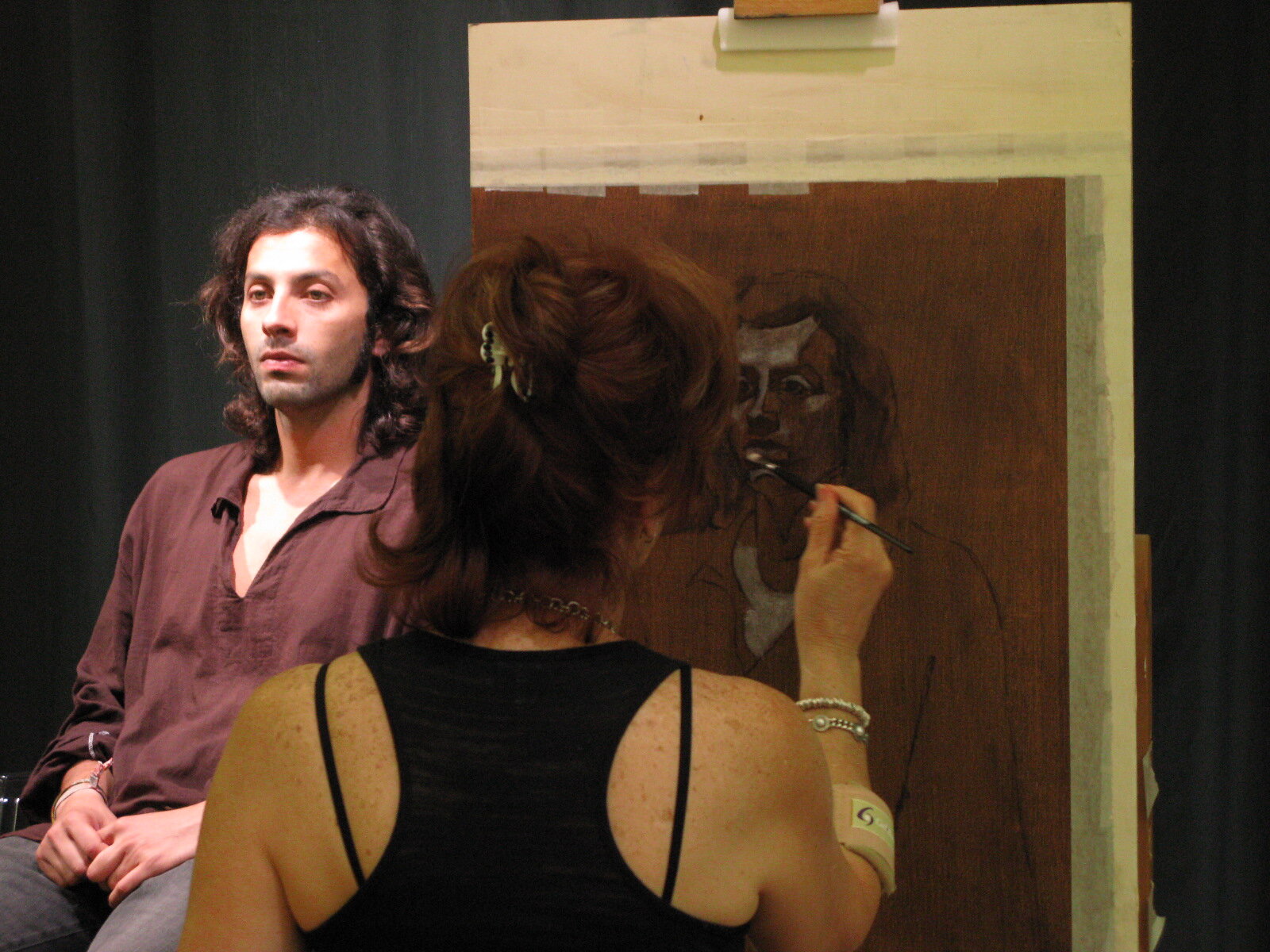
The painting is developed through a carefully considered sequence of stages. An underpainting is first established to organize the principal masses, values, and relationships of light and shadow. Students then progress through a limited color palette, learning to control color relationships and establish the overall harmony of the painting without being distracted by the full complexity of color. As the painting develops, the palette is gradually expanded toward full color, allowing increasingly subtle relationships of hue, temperature, saturation, and value to be observed and articulated.
Throughout the process, students are encouraged to work from the general to the particular. The major masses and structural relationships are established before smaller forms and details are addressed, ensuring that individual passages remain subordinate to the unity of the whole. Particular attention is given to the relationship between drawing and color, recognizing that accurate painting depends upon the continued integration of proportion, structure, value, and observation.
The study of the live model also requires students to consider the broader pictorial organization of the work. Pose, lighting, composition, background, and the relationship of the figure to its surrounding space are examined as integral components of the painting. Students learn how these elements can be coordinated to create a coherent and convincing representation of the human form while allowing the individual character and presence of the model to emerge.
The extended duration of the pose is essential to the process. The average pose is maintained for approximately two to four weeks, providing sufficient time for sustained observation, correction, and refinement. This allows students to move beyond the initial statement of the figure and progressively develop the painting through successive stages of analysis and resolution, with continuous guidance from the instructor.
Figure painting brings together the principal disciplines of the academic curriculum. The precision of the initial drawing, the structural understanding developed through cast and figure studies, the sensitivity to light acquired through chiaroscuro, and the knowledge of color developed through still life all become part of a single sustained process.
The objective is not simply to reproduce the appearance of the model, but to develop a deeper understanding of the human form and to translate that understanding into a unified work of painting. Through this demanding and comprehensive study, students gain the technical foundation, visual judgment, and discipline necessary to approach the figure with greater independence and confidence.