Drawing Excellence and Sequentially Progressive Modules
Still Life Painting
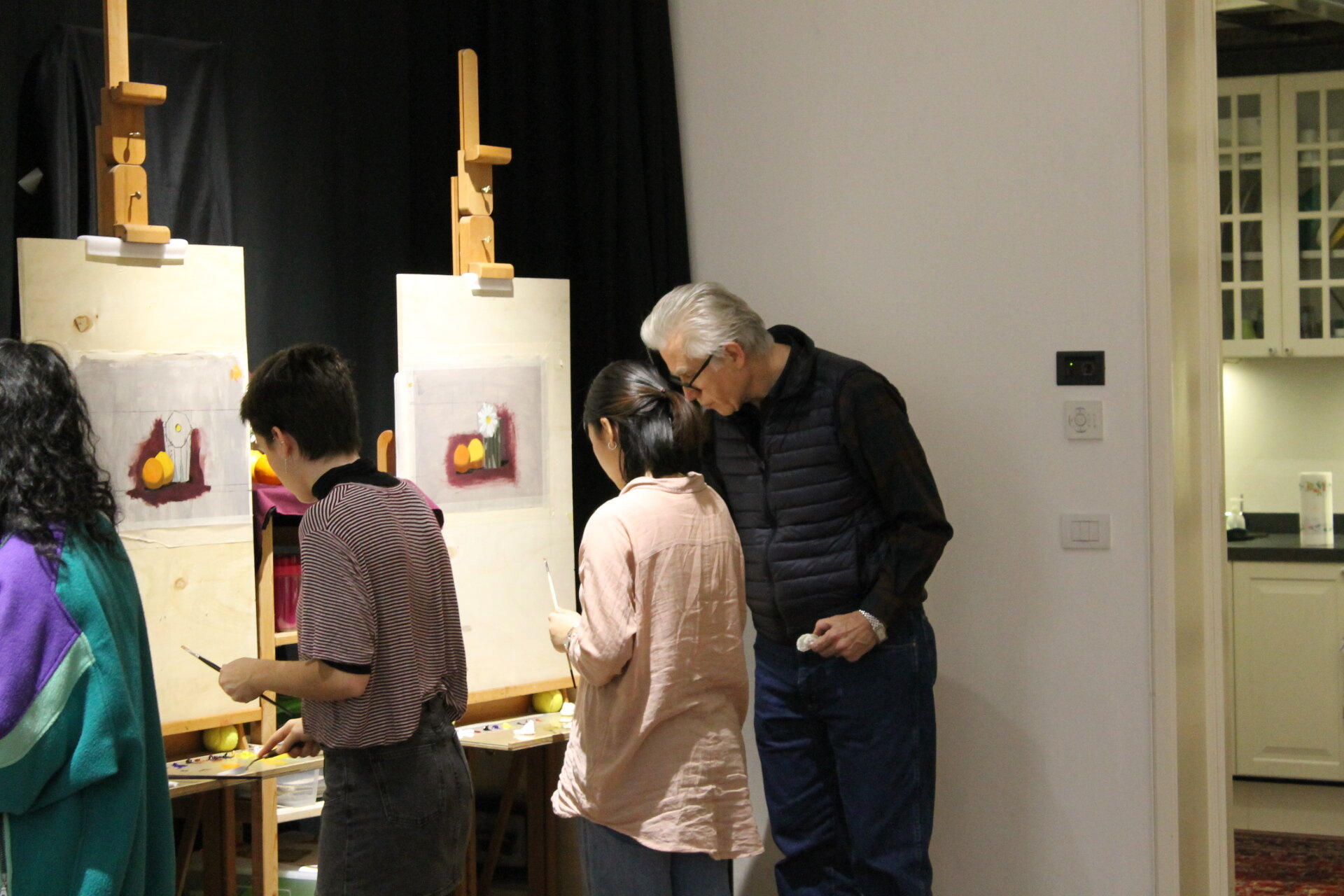
Still life painting offers students a concentrated and comprehensive study of the fundamental principles of painting. Working with inanimate objects allows students to observe and analyze the subject over an extended period, providing an opportunity to study composition, proportion, color, light, atmosphere, and value within a controlled environment.
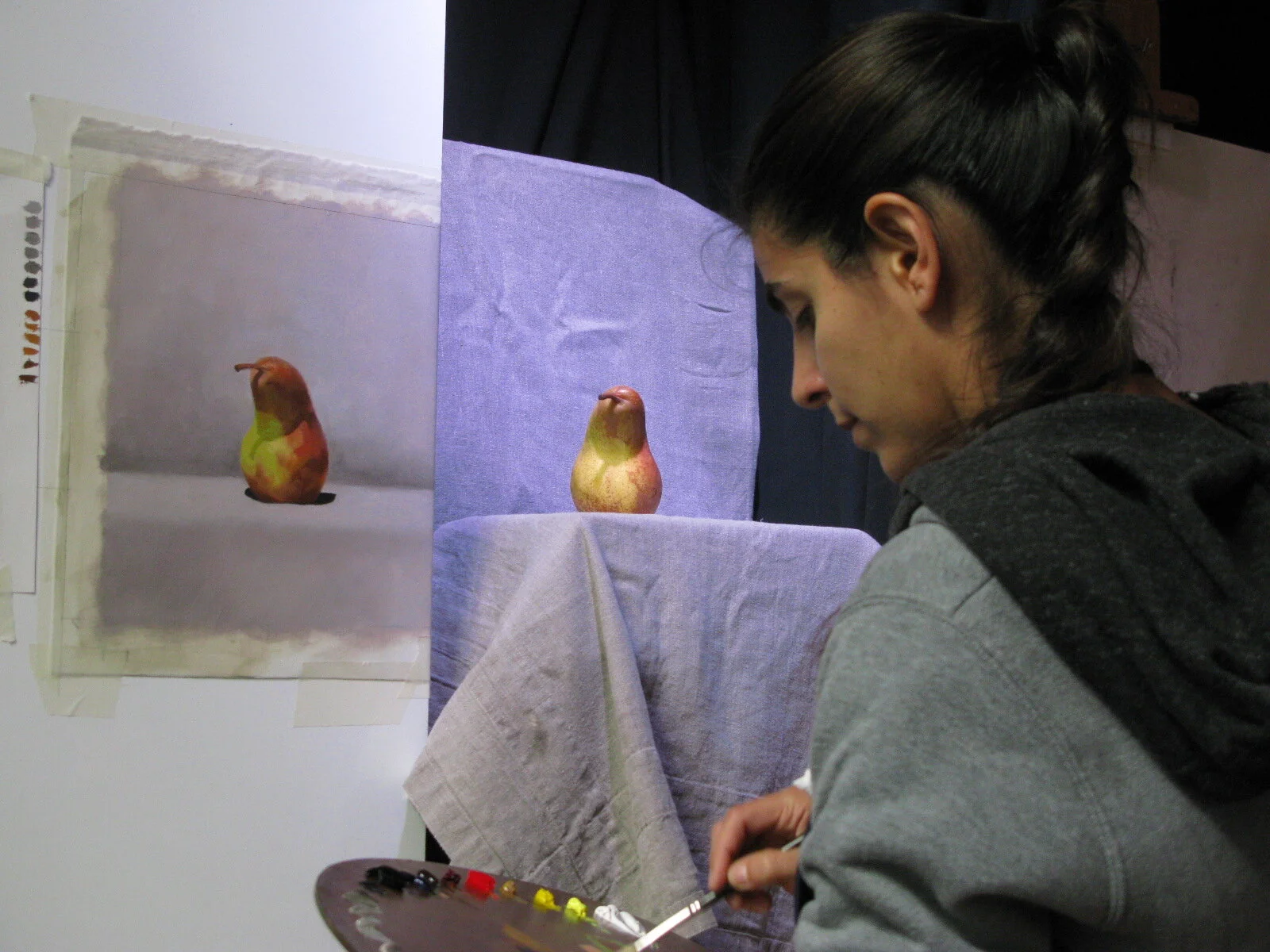
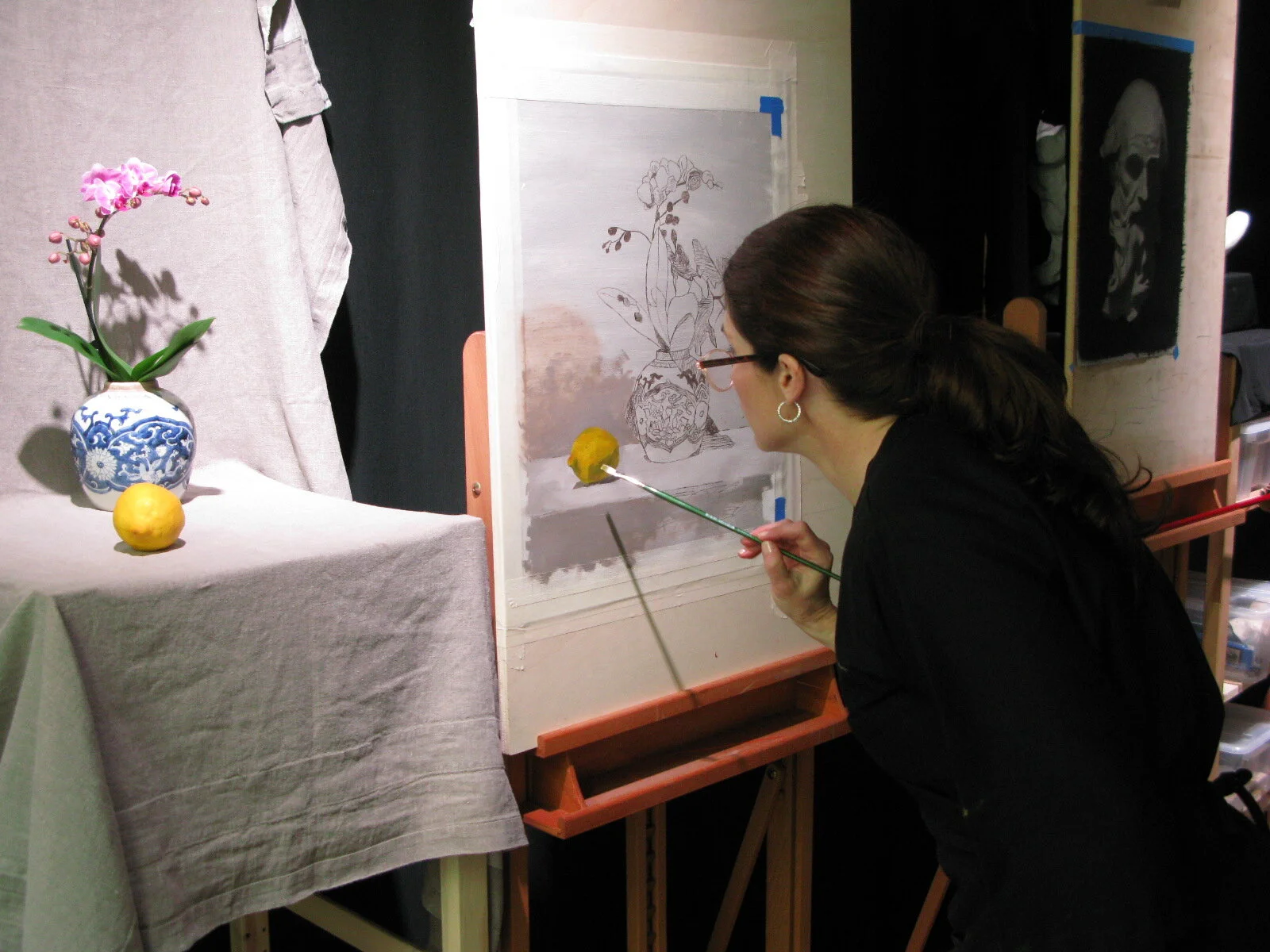
Each student develops a uniquely individual still life through a step-by-step process that begins with the selection of objects and materials and continues through the arrangement and lighting of the composition to the final painting. The choice of objects is carefully considered in relation to their shapes, colors, textures, surfaces, and visual relationships, allowing each student to construct a composition that is both coherent and individual.
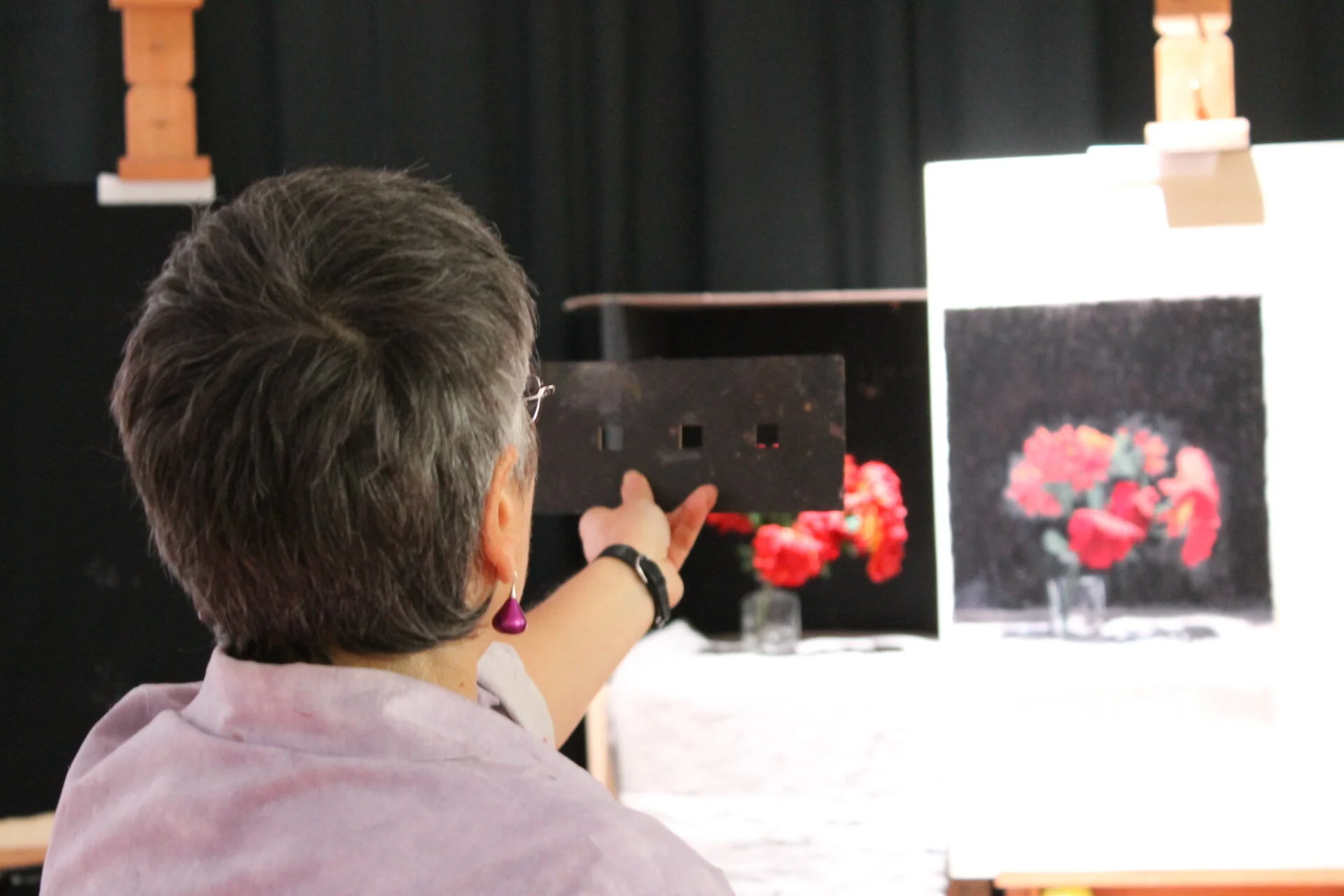
The set-up is an essential part of the process. Students learn how the placement, scale, orientation, and proximity of objects affect the balance and rhythm of the composition, as well as how the direction and quality of light influence the perception of form and color. Consideration is also given to the relationship between the objects and the surrounding space, including the background, cast shadows, and the overall atmosphere of the arrangement.
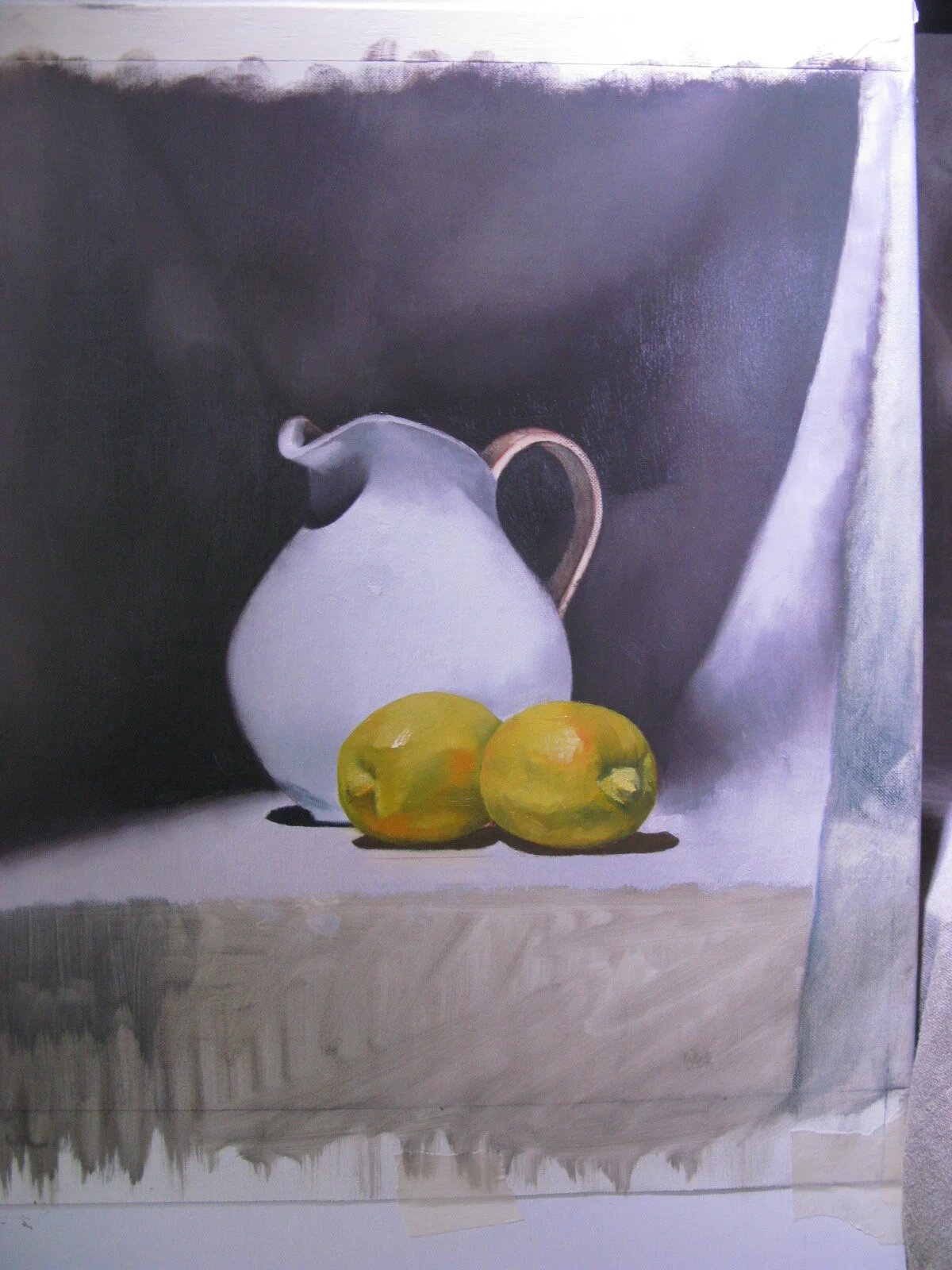
Once the composition has been established, students proceed through the successive stages of the painting. The initial drawing establishes the placement, proportions, and principal shapes, providing a structural foundation for the application of paint. Students then develop the painting through increasingly careful observation of color and value, learning to distinguish local color from the effects of light and to understand the relationships between warm and cool passages, light and shadow, and saturated and muted colors.
Particular attention is given to the organization of values and the modeling of form. Students learn to simplify and group related values while preserving the essential structure of the composition. As the painting develops, increasingly subtle variations of color and tone are introduced to describe volume, material, texture, transparency, and the effects of reflected light. The process encourages students to work from the general to the particular, maintaining the unity of the painting rather than allowing individual details to become disconnected from the whole.
The extended nature of the still life also provides an opportunity to develop a disciplined and methodical approach to painting. Students learn to evaluate their work objectively, identify problems in drawing, proportion, color, value, and composition, and make corrections at each stage of the process. The final painting is therefore the result not only of technical execution, but of a sustained process of observation, analysis, and decision-making.
Still life is particularly valuable within an academic painting program because the principles learned from inanimate objects are directly transferable to more complex subjects. The study of arrangement, color, light, atmosphere, and values provides a foundation that can subsequently be applied to figure painting, portraiture, and other forms of representational work.
The still life program reflects this principle by giving students the opportunity to study the essential problems of painting in depth. Through a carefully controlled subject and a sustained process of observation and refinement, students develop a technical foundation that can be carried into every subsequent area of their practice.