Drawing Excellence and Sequentially Progressive Modules
Portrait Drawing
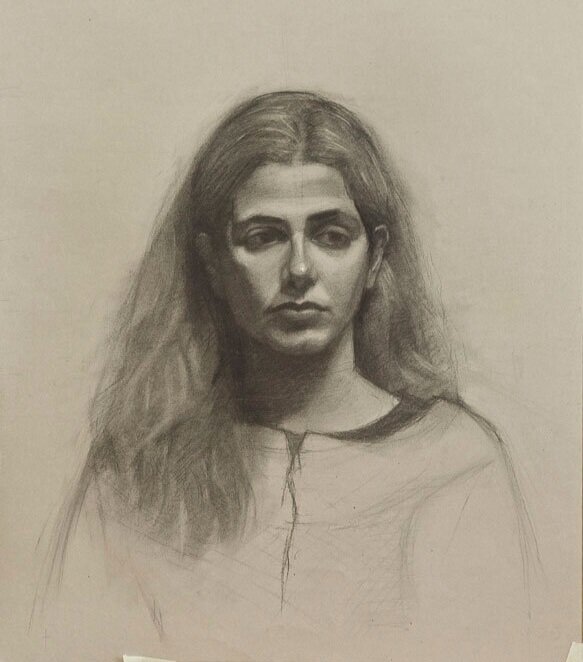
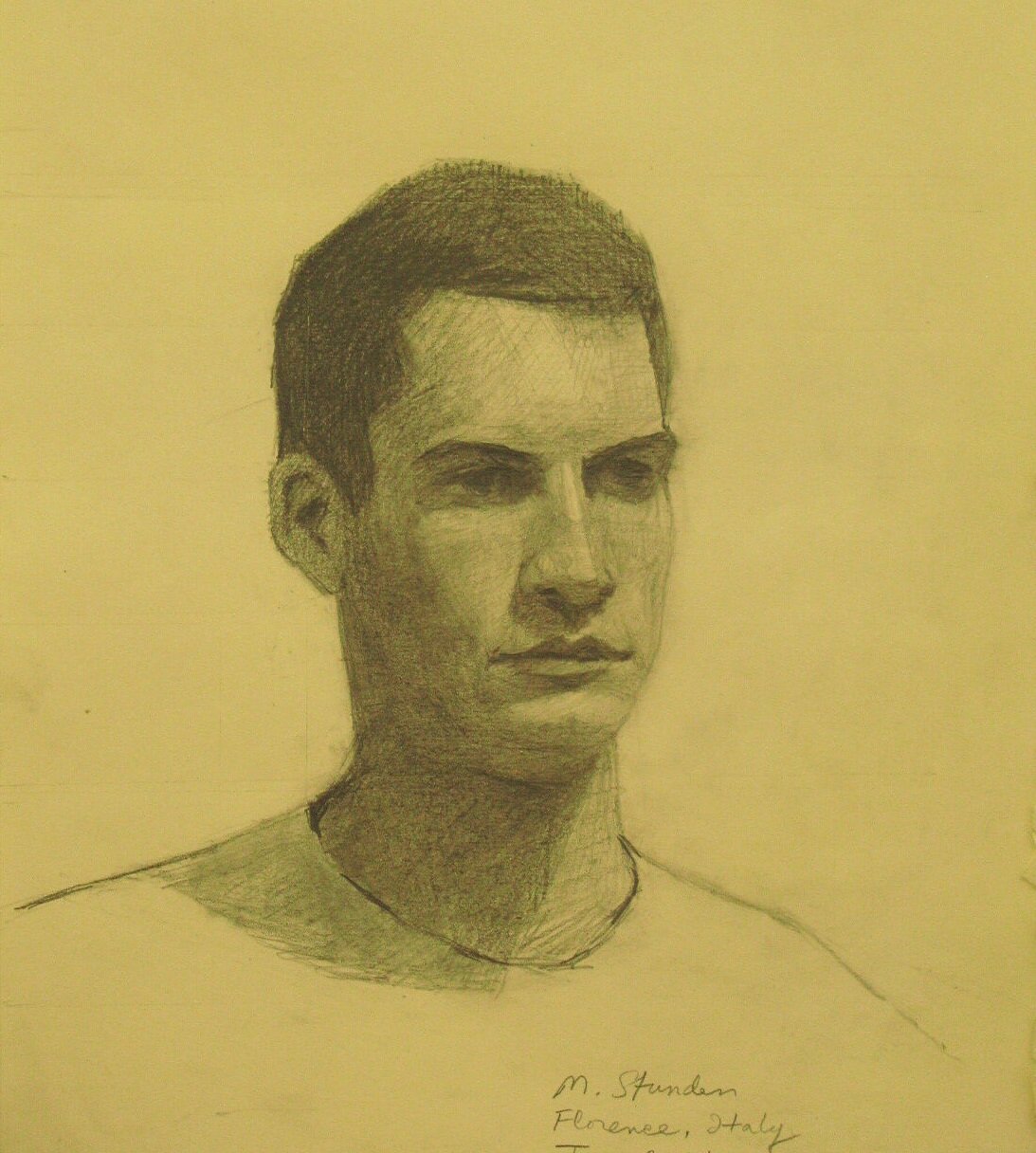
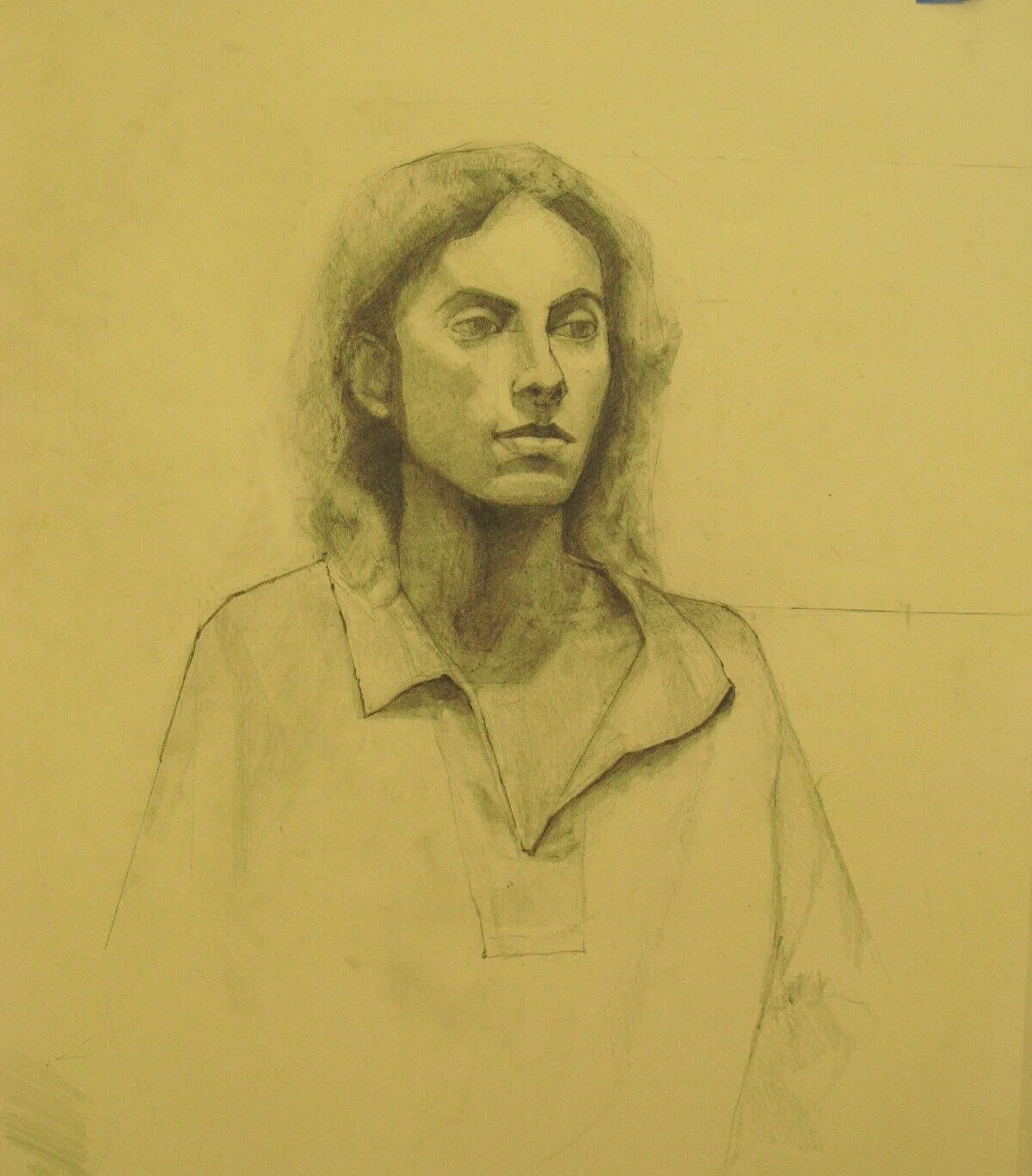
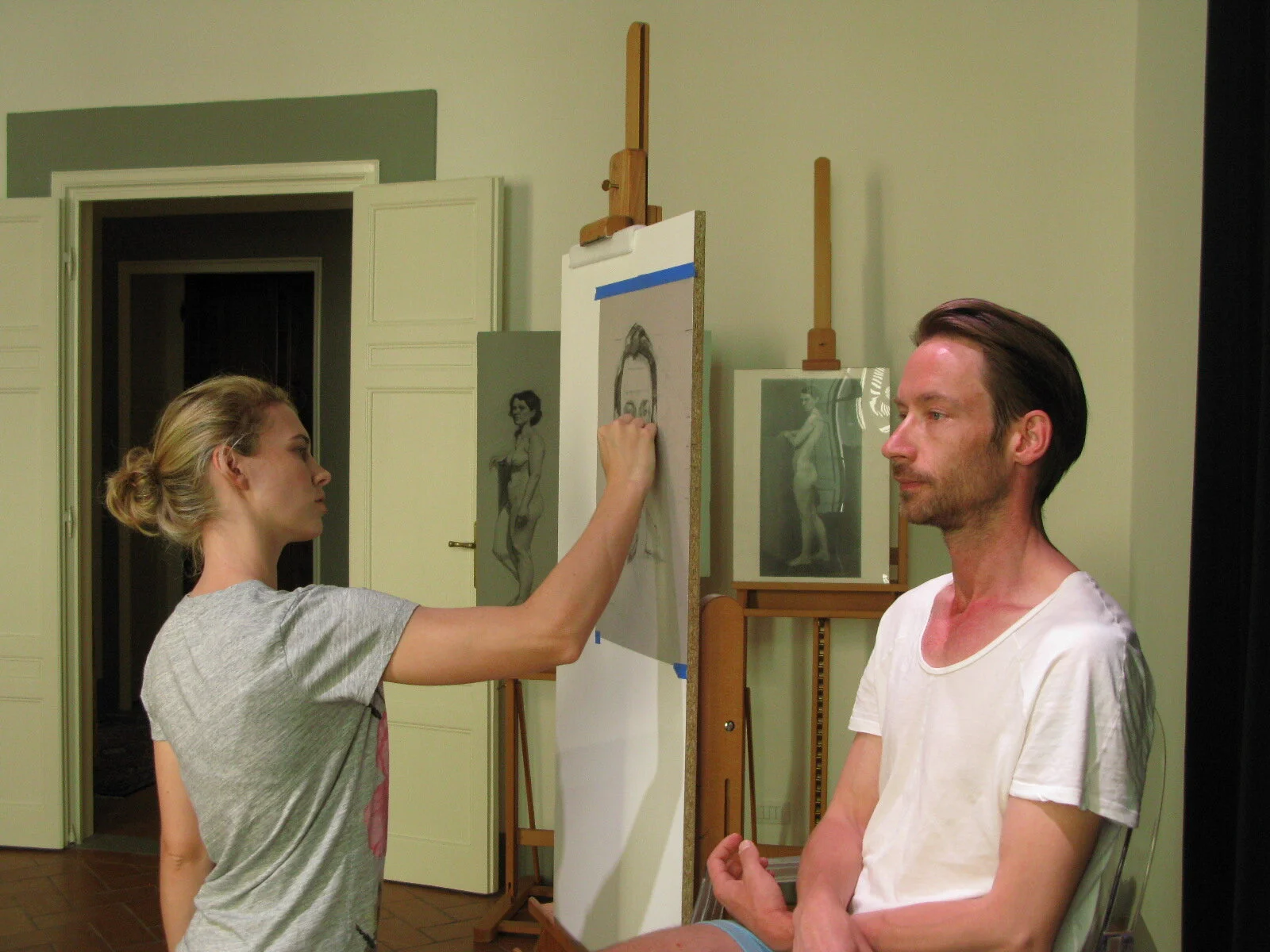
This module provides students with a thorough understanding of the process of drawing the portrait from the live model, combining sensitivity to the individual character of the sitter with the accuracy and discipline of the classical academic tradition. Building upon the principles developed through cast and figure drawing, students learn to translate direct observation into a convincing and structurally sound representation of the human head.
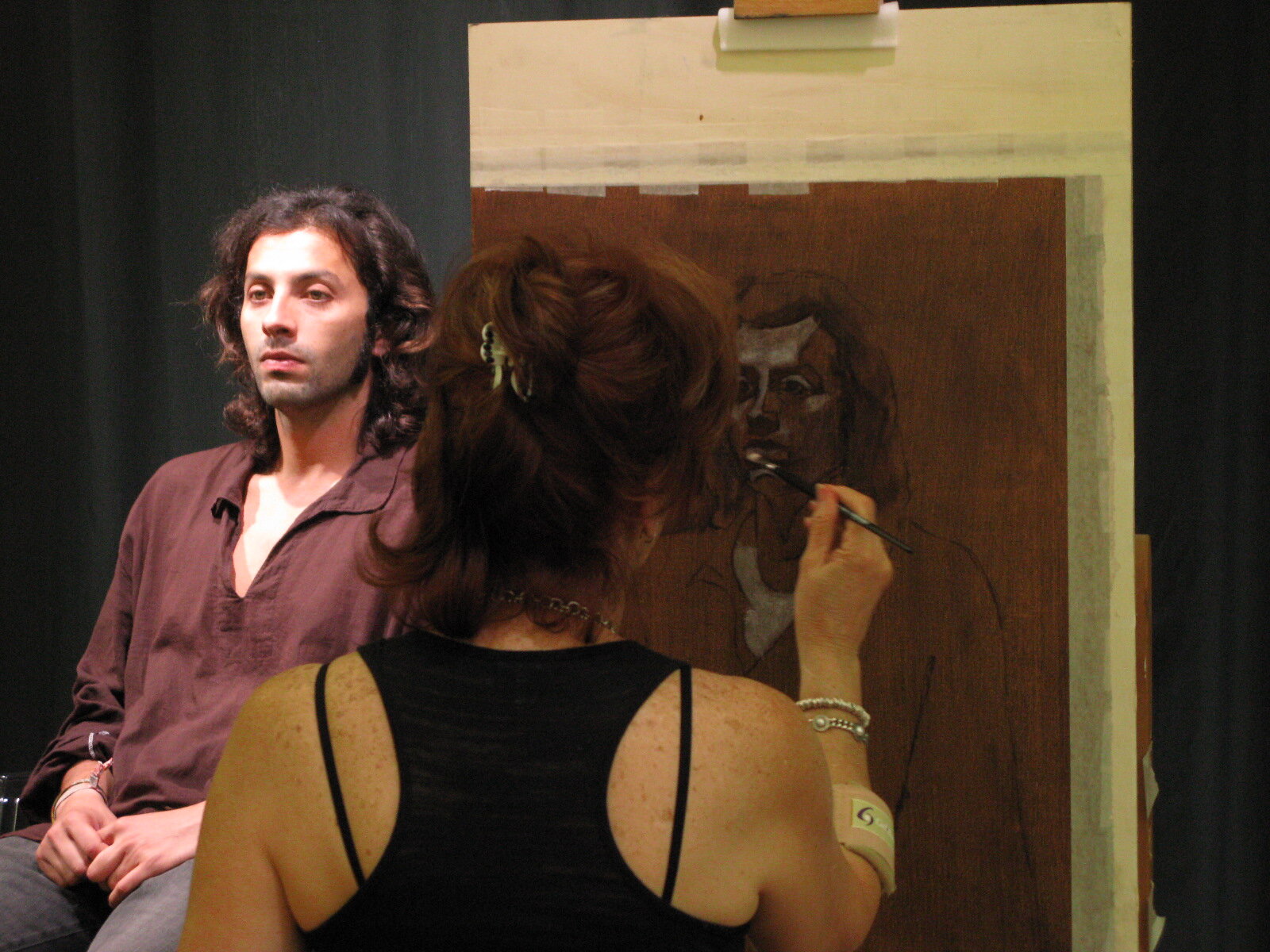
Students work from life using the sight-size method, developing greater precision in the observation of proportion, placement, line, and form. Particular attention is given to establishing the overall structure of the head before progressing to the individual features. The relationship between the major masses, the axes of the head, and the placement of the features is carefully observed and continuously evaluated throughout the drawing process.
The study of gesture and expression is introduced within this structural framework. Students learn to recognize the subtle relationships that give the sitter an individual presence and character, while avoiding an accumulation of unnecessary detail. The objective is to arrive at an organic unity in which the essential forms, proportions, expression, and tonal relationships work together as a coherent whole.
As the drawing develops, students use chiaroscuro to describe the volume and turning of the head. The principal light and shadow patterns are first established clearly before being developed through increasingly refined transitions of value. This allows the student to model the form while maintaining the clarity and structural integrity of the original construction. Particular attention is given to the relationship between planes, edges, and tonal transitions, so that the final rendering remains both convincing and visually unified.
Drawings are undertaken in pencil, charcoal, and chalk, allowing students to explore different approaches to line, value, and modeling. Each medium presents particular possibilities and challenges, encouraging students to adapt their handling of the material while maintaining the same fundamental principles of observation and construction.
The course also addresses the practical and artistic considerations involved in working from a live model. Students discuss the establishment of the pose, the positioning and orientation of the head, the arrangement and quality of the lighting, and the organization of the composition. These decisions are considered as integral parts of the drawing process, since the pose, light, and surrounding space directly influence the perception and representation of the sitter.
The average portrait pose is maintained for approximately two weeks, providing ample time for sustained observation, correction, and refinement. The extended duration allows the instructor to guide students through the successive stages of the drawing while giving them sufficient time to develop their understanding of proportion, structure, chiaroscuro, and the individual character of the model.
Through this sustained study from life, students develop greater confidence and independence in their ability to observe and draw the human head. The emphasis throughout remains on combining accuracy with sensitivity, creating a portrait that is structurally precise while retaining the organic unity and particular character of the individual sitter.