Drawing Excellence and Sequentially Progressive Modules
Cast Drawing
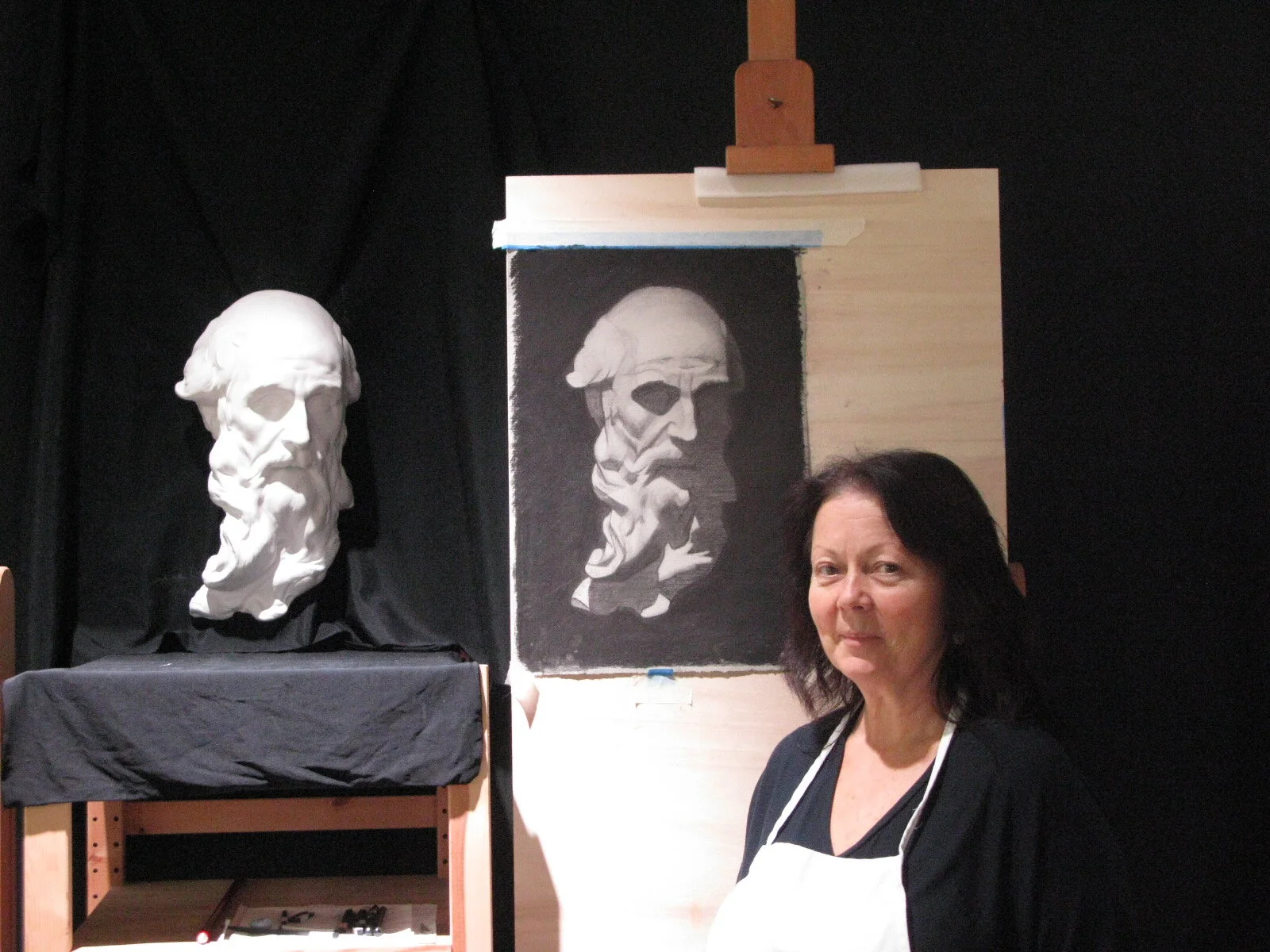
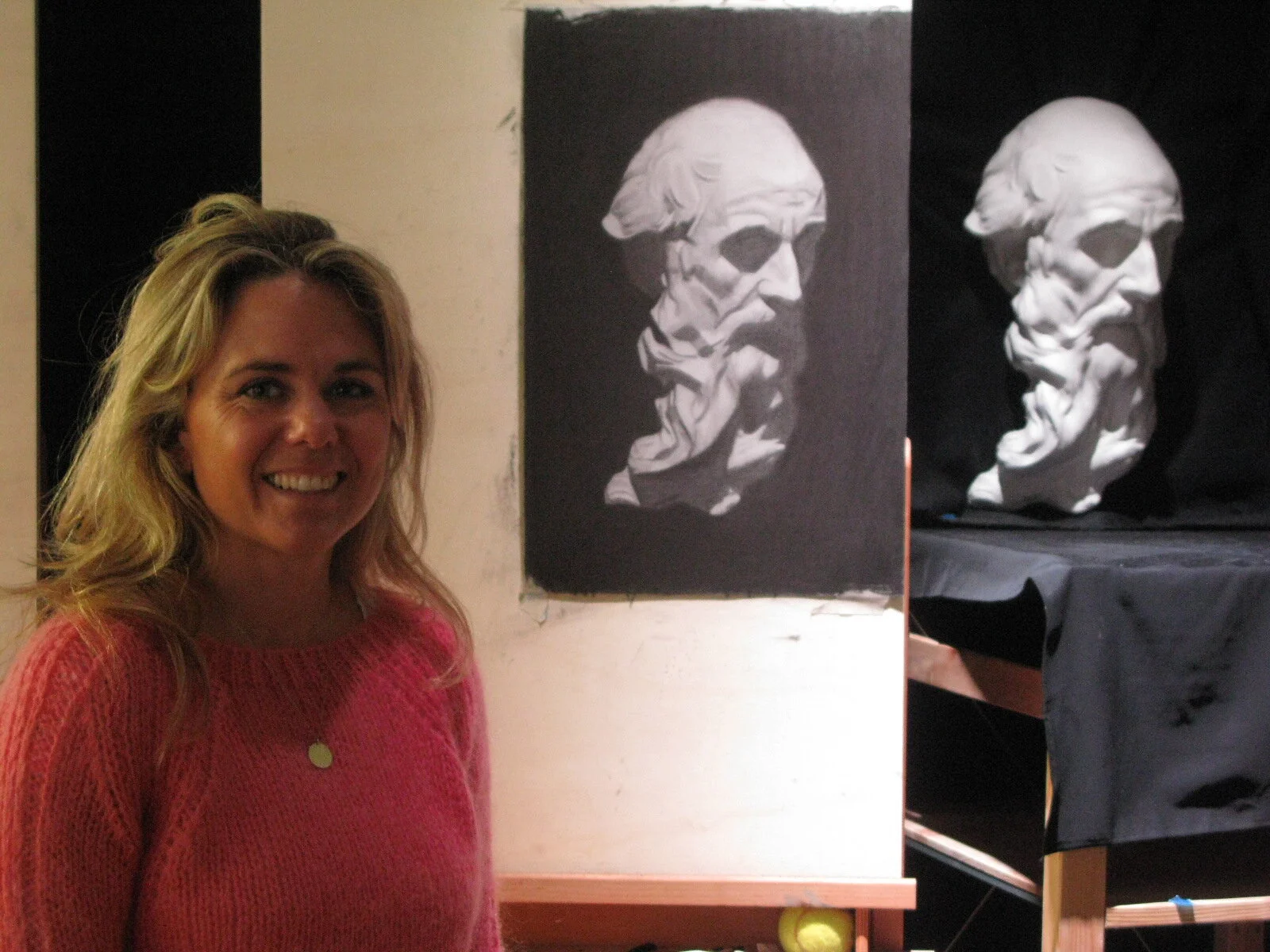
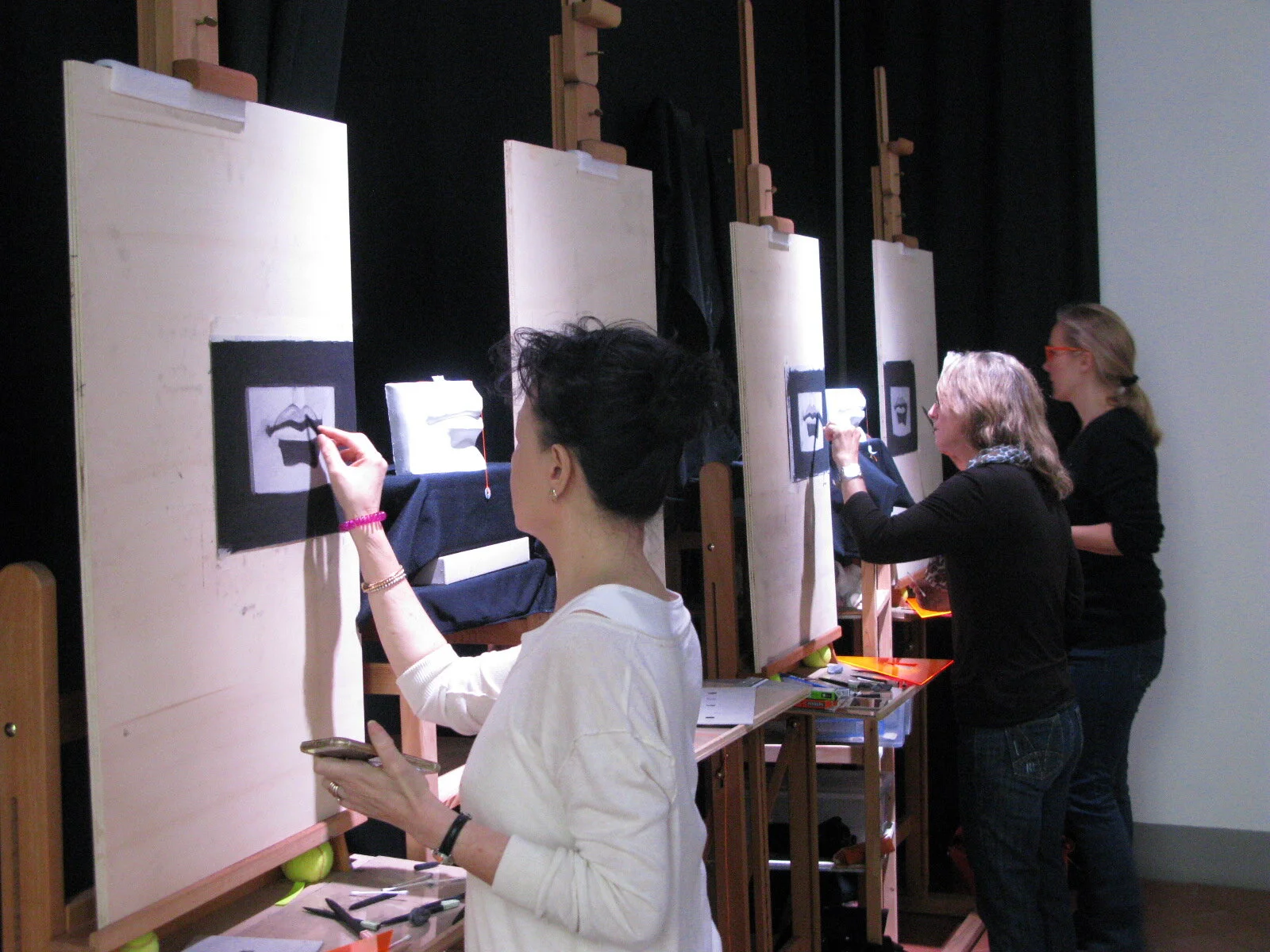
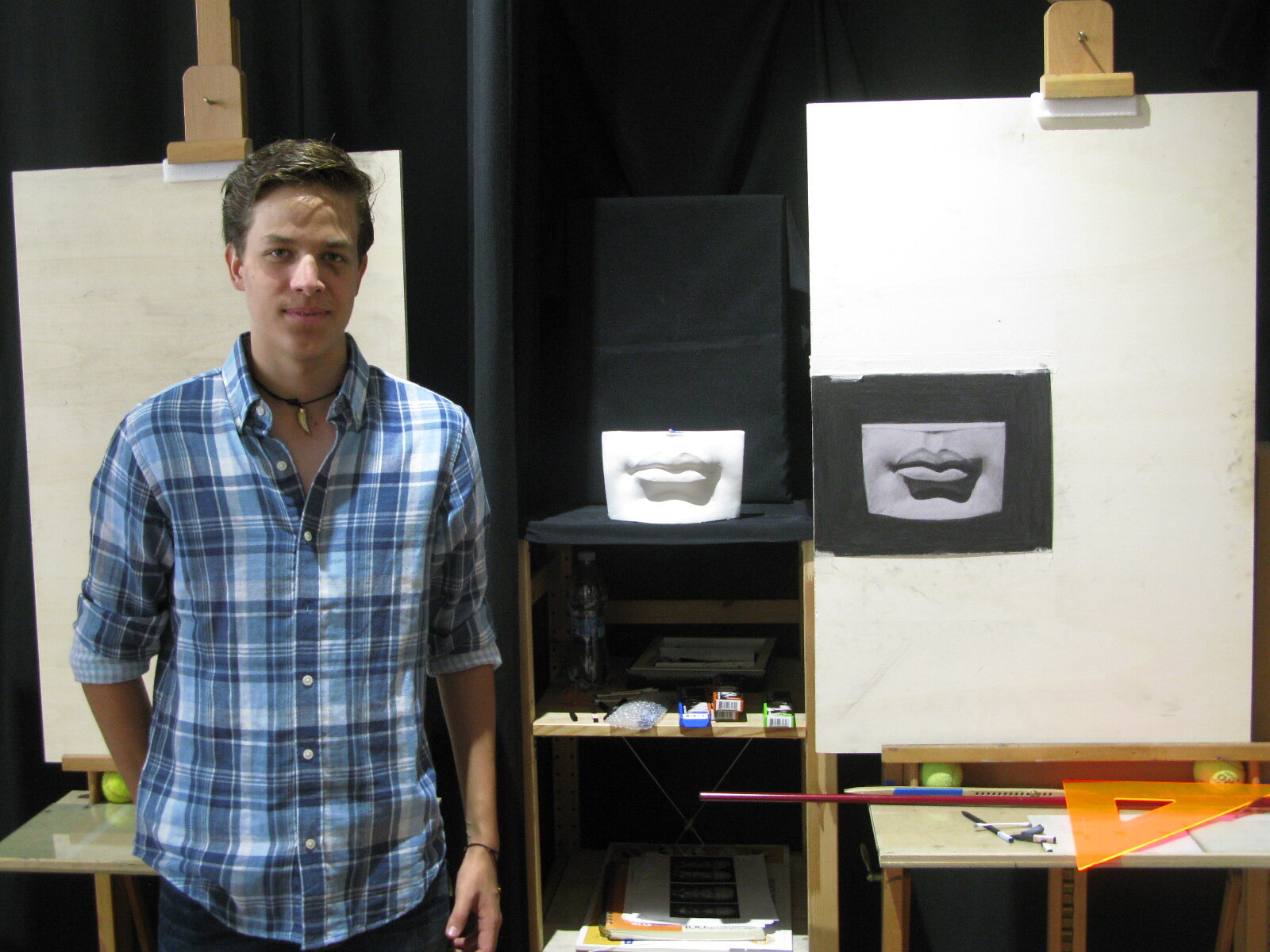
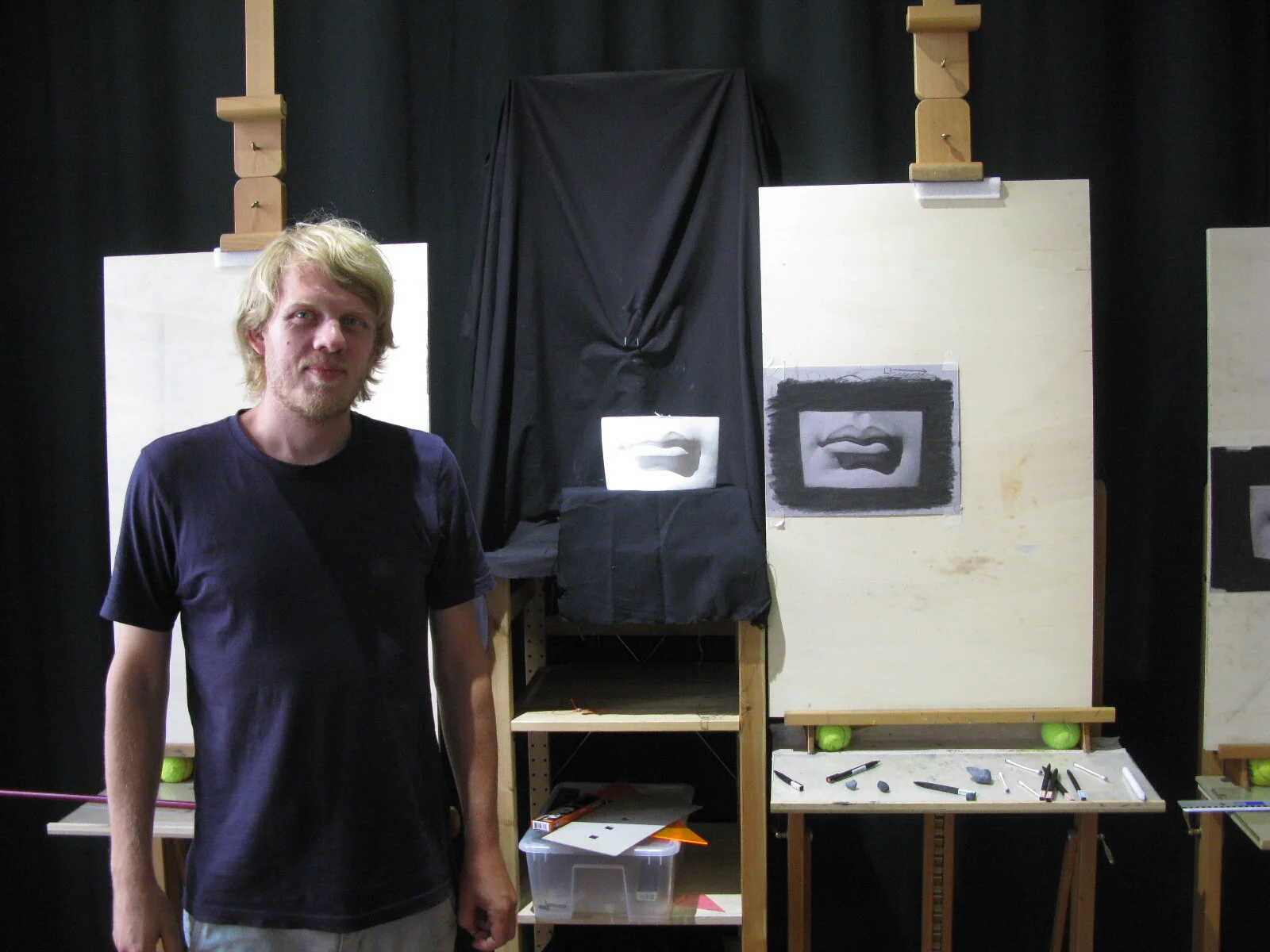
Cast drawing introduces students to the study of form through classical sculpture and provides a fundamental transition from the principles of drawing into the more complex study of portraiture. Working from plaster casts of selected works of classical sculpture, students learn to observe the human form in a controlled environment, where the subject remains fixed and the lighting conditions can be carefully maintained.
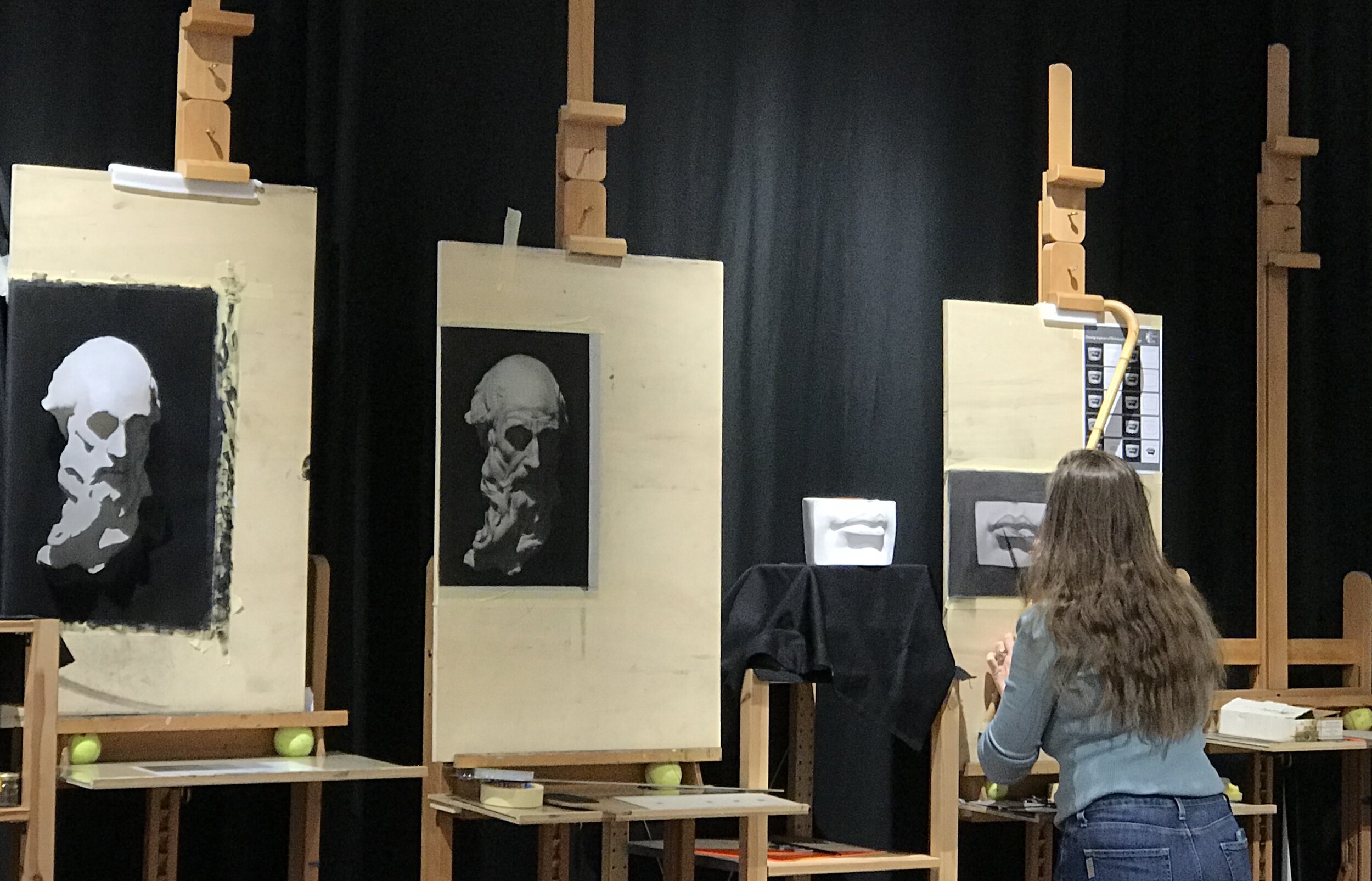
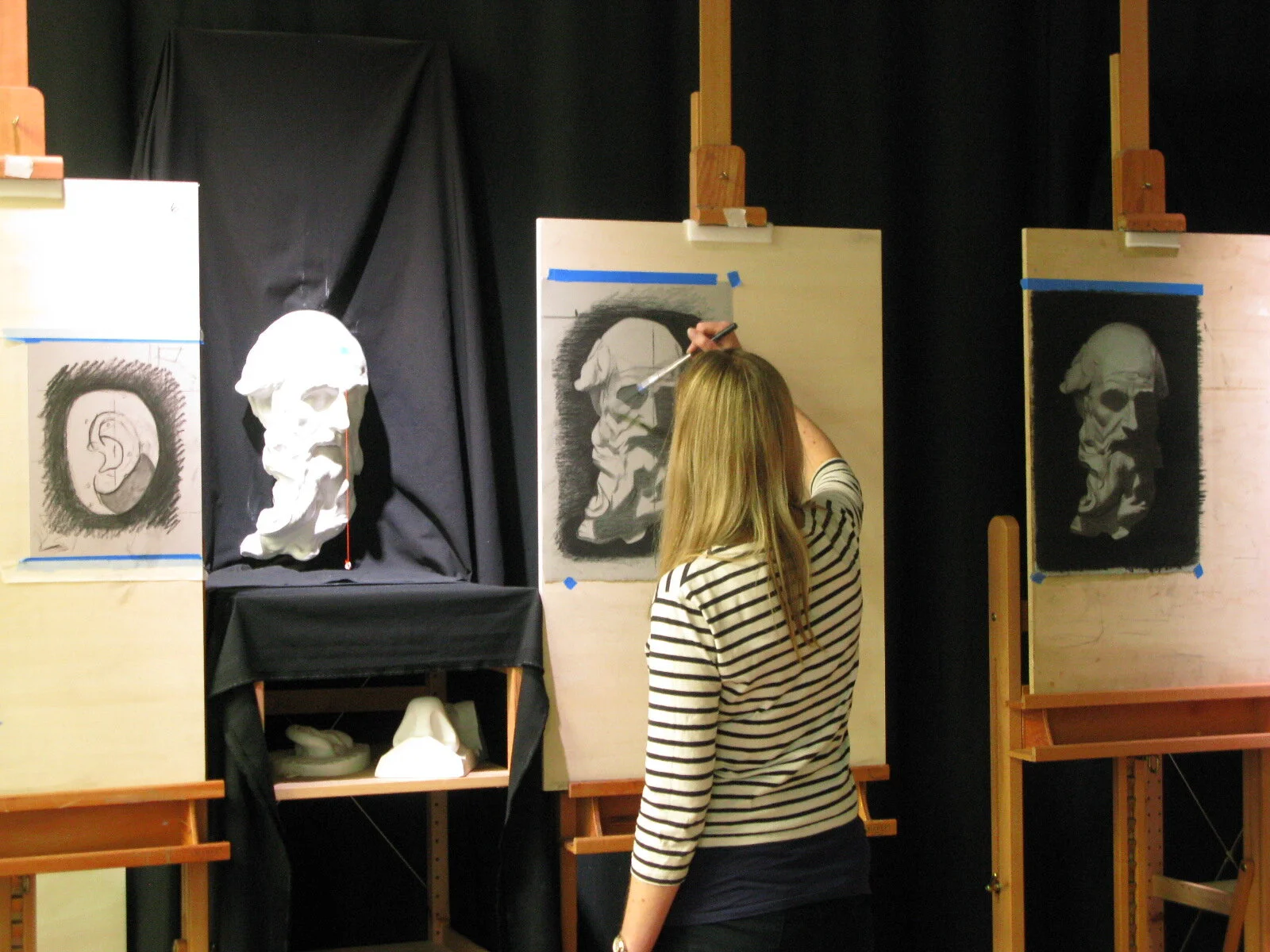
Building upon the observational and analytical skills developed in the previous stages of the program, students work using the sight-size method. The process begins by establishing the overall dimensions and placement of the cast, followed by a careful analysis of its structure. The form is first understood in simple geometric terms and translated into a precise outline, establishing proportion, alignment, and the relationships between the major shapes. Once the drawing is accurately constructed, students identify the principal shadow shapes and begin to organize the tonal structure of the image.
The drawing then progresses from a description of the general structure toward the modeling of the form. Through the controlled use of value, students learn to describe planes, transitions, and the turning of form, gradually creating the illusion of three-dimensional volume on a two-dimensional surface. Particular attention is given to the relationship between light and shadow, the hierarchy of values, and the way subtle changes in tone contribute to the perception of form.
The study of sculpture offers particular advantages in this process. Unlike working directly from a living model, the cast provides a stable subject whose form can be examined repeatedly and at length. This allows students to concentrate on the essential characteristics of structure and proportion and to learn how to abstract the fundamental information of an object from the complexity of visual experience. At the same time, studying works derived from the classical tradition introduces students to a visual language in which anatomy, proportion, balance, and idealized form have been carefully considered by the original artist.
A progressive series of cast drawings is undertaken throughout this stage. Initial studies are made in charcoal on white paper, emphasizing accurate construction, proportion, and the organization of light and shadow. Students then progress to toned paper, using chalk to work both into and out of the middle value of the surface. This expands the range of possibilities available to describe light and form and introduces the student to a more sophisticated approach to value organization.
As the student gains greater control over drawing and tonal modeling, the principles developed through cast drawing are transferred into the medium of oil paint. The first cast painting is executed as a grisaille, allowing students to concentrate exclusively on value, structure, and the modeling of form without the additional complexity of color. The grisaille serves as a direct continuation of the drawing process, translating the understanding of proportion, light, shadow, and volume into paint.
The cast program therefore establishes an essential bridge between drawing and painting. It consolidates the observational discipline developed through earlier studies while preparing students to approach the human figure and portraiture with a stronger understanding of structure, proportion, light, and three-dimensional form.